

Sweaty Betty Alternatives for Gym: 2026 Guide
Table of Contents
- Why Swapping Your Premium Gym Kit Is Worth It in 2026
- Sweaty Betty Alternatives for Gym: What Actually Matters
- Quick Comparison: GrantB Gym Kit at a Glance
- Best Squat Proof Gym Leggings UK Buyers Should Try First
- High Compression Leggings for Weightlifting and Heavy Compound Lifts
- How to Choose Gym Leggings for High Intensity Training
- Support, Sculpting and Size Inclusivity Across Body Types
- Longevity, Wash Tests and Fabric Durability
- Ethical Manufacturing and Sustainable Activewear Options
- Budget-Friendly Activewear That Still Performs
- Verdict: Which Sweaty Betty Alternative Fits Your Training
- Frequently Asked Questions
Last Updated: September 14, 2026
Why Swapping Your Premium Gym Kit Is Worth It in 2026
The premium activewear market has changed. Kit that once justified a £90 price tag now sits alongside alternatives that match it on fabric weight, opacity and waistband engineering for a fraction of the cost. This guide from GrantB Sportswear breaks down what separates gym leggings that perform from gym leggings that merely photograph well, and where the smart money goes in 2026.
Here's the uncomfortable truth most brand comparison articles skip: you are not always paying for fabric. You are often paying for a logo, a retail footprint and a marketing budget. Strip those away and the technical specification of some premium leggings and GrantB Sportswear leggings can be near-identical. Both use nylon-elastane blends. Both claim four-way stretch. Both promise squat-proof coverage.
The difference is in the details, and the details are testable.
Below, we'll show you exactly what to check before you spend, which construction features actually hold up under heavy compound lifts, and how to build a gym-ready wardrobe without paying premium prices for the privilege. The criteria we cover apply whether you're replacing a worn-out pair or building your first serious training kit.
Sweaty Betty Alternatives for Gym: What Actually Matters
The best Sweaty Betty alternatives are not defined by brand name. They are defined by four measurable things: fabric composition, fabric weight, waistband construction and opacity under stretch. Get those right and you have a legging that performs. Get them wrong and no amount of branding will save you mid-squat.
Let's start with the specification that decides everything.
Fabric Composition and Weight
Fabric composition is the ratio of fibres in a garment, and it determines stretch, recovery and opacity. Most performance leggings use a nylon and elastane blend. Nylon provides durability and a smooth, second-skin finish. Elastane provides the stretch and, critically, the recovery that stops leggings bagging out at the knee after a few washes.
A common mistake is assuming all nylon-elastane blends are equal. They are not. A blend with a higher elastane content gives more four-way stretch and better shape retention. A blend weighted too heavily toward nylon feels durable but can restrict movement during deep lunges.
Fabric weight matters just as much. Heavier fabrics are more opaque. Lighter fabrics breathe better but risk becoming see-through when stretched over a flexed glute. For high-intensity training, you want a fabric dense enough to stay opaque under tension without turning into a sauna.
Waistband Stability and Squat-Proof Coverage
Waistband stability is the ability of a legging's waistband to stay in position during movement without rolling, sliding or digging in. This is the single most common failure point in cheap activewear, and the complaint you hear most often from anyone who lifts seriously.
Squat-proof coverage is the visible result of getting three things right at once: fabric density, elastane recovery and waistband tension. If any one of those is weak, the legging will either go transparent at the bottom of a squat or start migrating downward during a set of deadlifts.
What most guides miss is that waistband height changes the equation. A high-waisted band distributes tension across a wider area, which reduces the pressure points that cause rolling. A mid-rise band sits lower and can dig in during hip hinge movements. If you train heavy, high-waisted construction is the safer bet.
British Standards Institution guidance on textile labelling and fibre content
Quick Comparison: GrantB Gym Kit at a Glance
GrantB Sportswear builds its range around a single fabric specification: a 78% nylon, 22% elastane composition used across leggings, shorts, bras, tops and jackets. That consistency matters, because it means the fit and feel you get from one piece carries across the whole wardrobe.
| Product | Price | Best For | Key Construction |
|---|---|---|---|
| Sculpt Leggings | £69.00 | Squats, lifting, all-round training | High-waisted, squat-proof, non-see-through |
| Flare Leggings | £69.00 | Studio classes, cardio, casual wear | Bootleg cut, supportive waistband |
| Core Sports Bra | £59.00 | Running, HIIT, high-impact work | High support, adjustable straps, removable pads |
| Training Shorts | £49.00 | Gym sessions, yoga, warm weather | High-waisted, four-way stretch, pockets |
| Studio Vest | £39.00 | Studio sessions, layering | Breathable, sweat-wicking, waist length |
| Sculpt Set | £119.00 | Coordinated training wardrobe | Bra and leggings, moisture-wicking |
| Performance Jacket | £84.00 | Warm-ups, cool-downs, travel | Full-length zip, secure pockets |
Prices sit in the mid-premium bracket rather than the top tier. Free delivery applies across orders, and there is £10 off orders over £100.

Best Squat Proof Gym Leggings UK Buyers Should Try First
The best squat-proof gym leggings for most people are high-waisted, built from a dense nylon-elastane blend, and designed with a wide, non-roll waistband. Everything else is secondary.
GrantB Sculpt Leggings meet all three criteria at £69.00. The high waistband is engineered to stay in place through squats, lunges and cardio, and the fabric is dense enough to remain opaque when stretched. The 78% nylon, 22% elastane composition gives a second-skin feel with enough compression to support without squeezing.
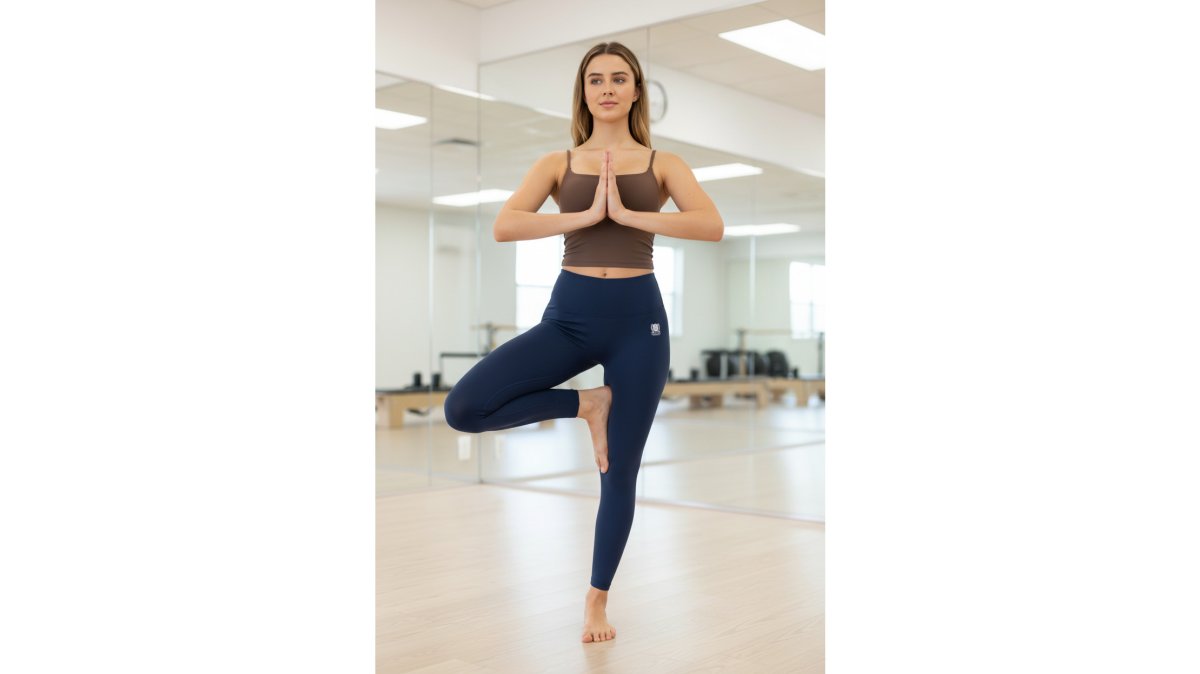
Here's where the specification earns its keep. Squat-proofing is not a coating or a treatment. It is a function of fabric density plus elastane recovery. When you drop into the bottom of a squat, the fabric across the glutes stretches to its maximum. A dense fabric stays opaque. A thin one does not, regardless of what the label claims.
If you train in a hot studio, the Training Shorts at £49.00 use the same fabric technology with less coverage.
High Compression Leggings for Weightlifting and Heavy Compound Lifts
High compression leggings for weightlifting need to do something different from leggings built for yoga. They need to hold shape under load, resist friction against a barbell, and stay put through repeated hip hinges at heavy weight.
Compression in activewear works by applying graduated pressure to the muscle. It can help with proprioception, allowing you to feel your body position more clearly, which may assist with form on squats and deadlifts. It can also reduce fabric shifting that causes chafing during high-rep sets.
GrantB Sculpt Leggings deliver supportive compression without the restrictive feel that some compression garments have. The four-way stretch means the fabric moves with your hip hinge rather than fighting it. That friction-free quality matters more than most people realise. A legging that bunches at the hip crease during a deadlift will distract you at exactly the wrong moment.
The Flare Leggings at £69.00 suit a different training pattern. The bootleg cut gives more room through the calf, which some lifters prefer for deadlift days, and the flared silhouette works as athleisure outside the gym.

Compression level can be matched to your training. Heavy compound work may benefit from firmer compression, while yoga and mobility work may benefit from lighter compression to allow a full range of movement. Buying one pair for everything might mean compromising on both.
How to Choose Gym Leggings for High Intensity Training
Choosing gym leggings for high-intensity training comes down to a short checklist you can run in under five minutes. Work through it in order and you will filter out most of the market. What most guides skip is that the right answer changes with your body shape, your height and the specific movements you train, so the checklist below pairs each test with the fit issue it solves.
- Check the fabric composition. Look for a nylon-elastane blend. Higher elastane content means better recovery and shape retention. A common pattern for some activewear is 20-25% elastane for lifting; lighter blends may suit yoga and mobility work.
- Assess fabric density under multi-directional stretch. Hold the fabric up and stretch it both across and diagonally. If you can see your hand through it when stretched, it will not be squat-proof.
- Test the waistband. A wide, high-waisted band distributes tension better and resists rolling. Narrow bands dig in during hip hinges. For shorter torsos, a slightly lower rise can prevent the band sitting under the ribs; for longer torsos, a higher rise stops the band migrating down during deadlifts.
- Confirm four-way stretch. Fabric should stretch in all directions, not just horizontally. This affects how the legging handles lunges and lateral movement.
- Check the seam construction. Flatlock or seamless construction reduces chafing during high-rep work. Gusseted crotches matter more for curvier frames, where a flat seam can pull.
- Verify moisture management. Sweat-wicking fabric moves moisture away from the skin rather than holding it. This is a fabric property, not a coating, so it should not wash out.
- Consider the fit guide and your proportions. A proper size guide can be helpful. If you are between sizes, sizing up rather than down may be advisable, as leggings that are too tight can put excess tension on the seams and the elastane.
Total time to run this check: about five minutes. It will save you from most of the returns that plague online activewear shopping.
British Standards Institution guidance on textile labelling and fibre content
Support, Sculpting and Size Inclusivity Across Body Types
Sculpting activewear should enhance your natural shape, not compress you into a different one. This distinction matters, as some "sculpting" marketing may describe garments that simply run small and rely on tightness to create a silhouette.
GrantB Sportswear designs its sculpting fit around the same 78% nylon, 22% elastane fabric across the range. The compression is supportive rather than restrictive, and the high waistband creates a smooth line without digging in. For anyone who has been burned by sculpting brands that leave you feeling squeezed rather than supported, the difference is in how the fabric recovers rather than how hard it grips.
Fit can vary across body types. Prioritising waistband construction over waist measurement can be helpful. A wide, high band with good elastane recovery may adapt better across body shapes than a narrow band sized precisely.
NHS guidance on physical activity and choosing appropriate workout clothing
For yoga practitioners, the priorities shift again. You need a fabric that maintains shape through complex poses without restricting the hip opening. The Studio Vest at £39.00 and the Core Sports Bra at £59.00 both use the same breathable, sweat-wicking fabric, which keeps the fit consistent across a coordinated set.

Longevity, Wash Tests and Fabric Durability
Durability is a key factor in activewear. This section outlines a simple wear-and-tear protocol you can run yourself, as initial reviews may not fully capture how a legging performs over an extended training block.
Common issues that can affect gym leggings include elastane fatigue, seam failure and pilling. Elastane fatigue is the gradual loss of recovery that can cause leggings to bag at the knee and lose their squat-proof quality. Seam failure can occur when stitching cannot handle the tension of repeated stretching. Pilling can result from friction against barbells, machines and other fabric in the wash.
A 78% nylon, 22% elastane composition can contribute to longevity. Nylon is abrasion-resistant, which can help with pilling, and a higher elastane content may support recovery over time. Flatlock or seamless stitching can distribute tension along the seam rather than concentrating it at stitch points.
A six-month wear-and-tear protocol you can run at home
- Baseline (day one). Photograph the leggings flat and stretched over your hand against a bright window. Note the waistband height and how it sits on your natural waist.
- Wash cycle log. Wash at 30 degrees or lower, air dry flat, and record the number of washes. Aim for a realistic cadence, most people wash activewear after every one to two sessions, which is roughly 50-75 washes over six months for a twice-weekly trainer.
- Monthly opacity check. Repeat the stretched-over-hand test in the same lighting. Note any increase in light transmission across the glutes and inner thigh.
- Monthly recovery check. Stretch the knee area and release. Fabric that springs back cleanly is holding its elastane; fabric that stays slightly stretched is fatiguing.
- Monthly seam and pilling check. Run a finger along the inner thigh seam and the crotch gusset. Look for pulled stitches, thinning fabric or bobbling on the outer thigh where a barbell or machine makes contact.
- Six-month verdict. Compare against your baseline photos. A legging that still passes the opacity and recovery checks at six months is a genuine investment piece; one that has bagged at the knee or gone sheer has failed regardless of its original price.
Practical steps that extend the life of any gym legging:
- Wash at 30 degrees or lower to slow elastane degradation
- Skip the tumble dryer entirely, as heat is the fastest way to kill stretch recovery
- Use a mesh laundry bag to reduce friction against zips and hooks
- Avoid fabric softener, which coats the fibres and reduces moisture-wicking performance
- Air dry flat, away from direct heat
- Rotate between at least two pairs so each has time to recover between wears
UK government guidance on textile waste and sustainable clothing consumption
Ethical Manufacturing and Sustainable Activewear Options
Sustainability in activewear can be complex to verify. Nylon and elastane are both synthetic fibres derived from petrochemicals, and they do not biodegrade. Claims of fully sustainable synthetic leggings may require careful consideration of definitions.
What can be assessed is manufacturing practice. Transparency about where garments are produced, the length of the supply chain, and information about working conditions can be considered. A shorter supply chain may be easier to audit and could carry a lower transport footprint.
The longevity of activewear can be impactful. A legging that lasts longer may have a lower environmental cost per wear. Fabric composition and construction quality can contribute to sustainability. Buying fewer, better pieces and washing them carefully can be an effective approach.
UK government guidance on textile waste and sustainable clothing consumption
GrantB Sportswear's approach centres on durability: the same fabric specification across the range, designed to hold shape and opacity through repeated wash and wear cycles.
Budget-Friendly Activewear That Still Performs
Budget-friendly activewear does not necessarily mean compromising on performance. It can mean paying for construction rather than branding, and buying in a way that gets you more kit for the same spend.
GrantB Sportswear's price points sit below the top tier of premium activewear while using a comparable fabric specification. The Studio Vest at £39.00 and Training Shorts at £49.00 are the lowest entry points into the range. The Core Sports Bra at £59.00 and both legging styles at £69.00 form the core of a training wardrobe. Bundled sets bring the per-piece cost down further: the Core Shorts Set at £98.00 and the Sculpt Set at £119.00 each pair two pieces at a lower combined price than buying separately.
There is also £10 off orders over £100, which effectively makes the set pricing better still if you are building out a full rotation.
For anyone who buys activewear primarily during sales, a practical approach can be to build around core pieces you wear constantly. A smaller rotation of better-quality pieces may offer greater longevity.
Verdict: Which Sweaty Betty Alternative Fits Your Training
Match the piece to the training, and the decision becomes straightforward.
For heavy compound lifting and anyone who needs guaranteed squat-proof coverage, the GrantB Sculpt Leggings at £69.00 are the strongest single purchase. For studio classes and cardio where you want a flattering silhouette with a bit more room through the leg, the Flare Leggings at £69.00 do the same job in a different cut. For high-impact work, the Core Sports Bra at £59.00 provides the high support and adjustable straps that running and HIIT demand.
If you are rebuilding a wardrobe from scratch, the Sculpt Set at £119.00 covers the two pieces you will wear most. Add the Training Shorts for warmer sessions and the Performance Jacket for warm-ups and travel, and you have a rotation that covers gym, studio and street without a single weak link.
The real challenge with replacing premium gym kit is finding something that performs on opacity, waistband stability or shape retention. GrantB Sportswear builds its range on a consistent 78% nylon, 22% elastane specification designed for squat-proof coverage, supportive compression and a fit that holds through repeated wash cycles, with free delivery and £10 off orders over £100. Get started with GrantB Sportswear and build a training wardrobe that performs from your first rep to your final set.
Frequently Asked Questions
What are some activewear brands similar to Sweaty Betty?
Sweaty Betty alternatives for gym use tend to fall into two groups: premium performance labels and mid-priced specialists that focus on fabric engineering. What separates them is fabric composition, waistband construction and whether the leggings are genuinely squat-proof. Look for a 78% nylon, 22% elastane blend, a high-waisted band that does not roll, and a dense knit that stays opaque under stretch. GrantB Sportswear's leggings and sets are built to these specifications, with prices from £39 to £139.
Which gym leggings offer the best compression and squat-proof quality?
Compression and squat-proof coverage come from the same thing: a dense, high-elastane knit. Four-way stretch fabric with a 78% nylon, 22% elastane composition gives supportive compression without restricting movement, and it stays opaque when stretched. A wide, high-waisted band keeps the leggings anchored through squats, lunges and deadlifts. GrantB Sculpt Leggings (£69) and GrantB Flare Leggings (£69) are both designed as squat-proof and non-see-through, with a sculpting fit and a waistband built to stay in place.
Are there more affordable alternatives to Sweaty Betty for high-intensity training?
Yes. GrantB Sportswear covers the full kit at lower price points than most premium labels: GrantB Studio Vest at £39, GrantB Training Shorts at £49, GrantB Studio Top at £49, GrantB Core Sports Bra at £59, and leggings at £69. Bundled sets bring the cost down further, with the GrantB Core Shorts Set at £98 and the GrantB Sculpt Set at £119. Free delivery is included, and orders over £100 get £10 off, which makes a two-piece set the better value route.
What should I look for when choosing gym leggings for weightlifting?
For weightlifting, prioritise waistband stability over softness. A high-waisted, wide band with firm elastic holds position when you hinge at the hip, and a dense knit resists sheering under load. Check the fabric composition: 78% nylon and 22% elastane delivers four-way stretch with enough recovery to keep its shape. Look for flatlock or seamless construction to reduce friction against the bar, and confirm the leggings are described as squat-proof and non-see-through rather than just opaque.
How do GrantB Sportswear leggings compare to premium gym brands?
GrantB Sportswear sits in the mid-to-premium bracket, with leggings at £69 and sets from £98 to £139. The fabric is a 78% nylon, 22% elastane blend across the range, which is the same composition used by higher-priced labels for compression and moisture management. Where GrantB differs is the focus on waistband stability and squat-proof coverage for heavy compound movements, plus a full layering system: sports bras, vests, tops, shorts, leggings and jackets that work as a coordinated kit.