

How to Wash Activewear for Longevity: 2026 Care Guide
Table of Contents
- Why Activewear Needs Different Care
- What You'll Need Before You Wash Activewear
- Step-by-Step: How to Wash Activewear for Longevity
- How to Remove Sweat Smell from Gym Clothes
- Why Fabric Softener Ruins Gym Clothes
- Can You Tumble Dry Activewear?
- Hand Washing vs Machine Washing Activewear
- Hard Water, Microplastics, and Storage: What Most Guides Miss
- Common Mistakes That Shorten Activewear Lifespan
- Conclusion
- Frequently Asked Questions
Last Updated: September 12, 2026
Why Activewear Needs Different Care
Activewear is engineered fabric, not ordinary cotton, and treating it like a standard t-shirt is the fastest way to destroy it. Learning how to wash activewear for longevity starts with understanding that synthetic fibres, elastane blends, and technical finishes all react badly to heat, harsh chemistry, and mechanical agitation. At GrantB Sportswear, we design pieces to hold their sculpt and support through hundreds of sessions, but that performance only survives if your laundry routine respects the fabric.
Here's the core problem: most people wash gym kit exactly like they wash everything else. Hot water, a full scoop of detergent, a splash of softener, then a hot tumble dry. Every one of those choices attacks the fibres that give activewear its stretch, breathability, and shape retention.
The good news is that the fix is simple and cheap. The routine below takes about the same effort as your current one, just with different settings. Get it right and your leggings keep their opacity, your sports bras keep their support, and your gym kit stops smelling like a locker room after one wear.
What You'll Need Before You Wash Activewear
Gather the right tools first, because improvising mid-load is how mistakes happen. A few inexpensive items make the whole process faster and gentler on fabric.
- A mesh wash bag for bras, small items, and anything with hooks
- A pH-neutral or sports-specific laundry detergent
- White distilled vinegar for odour neutralising and residue stripping
- A stain treatment bar or gentle pre-treatment spray
- A drying rack or line for air drying
- Your machine's manual, so you know which cycle is actually the delicate one
Skip the fabric softener entirely. More on why that matters below.
Step-by-Step: How to Wash Activewear for Longevity
The full process runs about 40 minutes of active time plus drying, and it works for polyester, nylon, spandex blends, and compression gear alike.
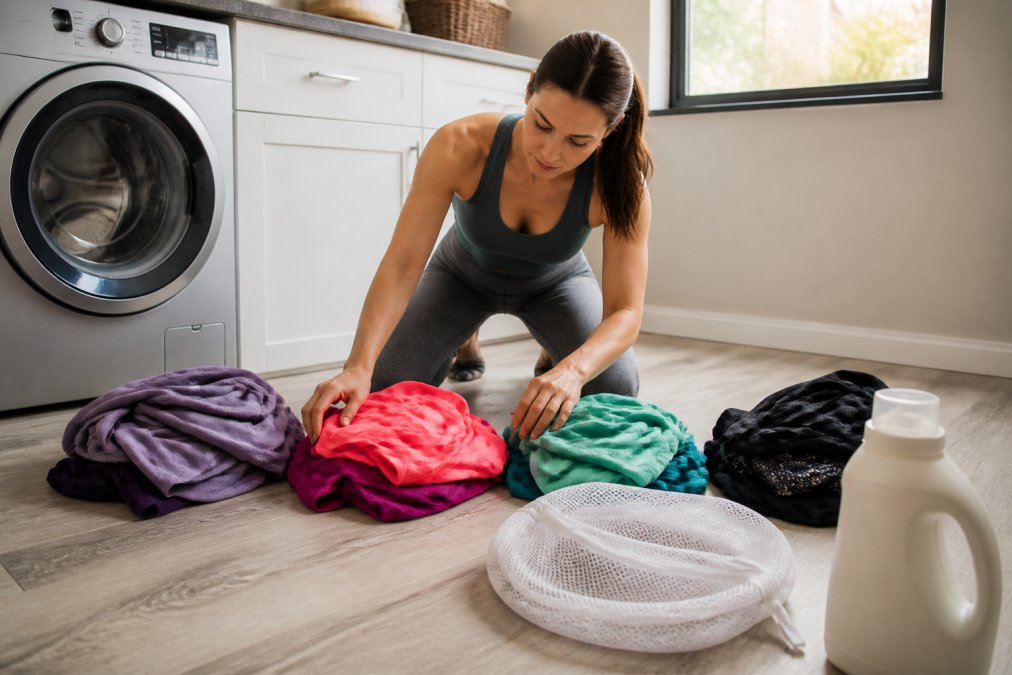
Step 1: Sort by Fabric Type and Colour
Separate your kit into three rough groups: synthetic performance fabrics, cotton or cotton-blend pieces, and anything delicate like sports bras with moulded cups. Keep darks away from lights, and never wash activewear with towels or heavy denim. Towels shed lint that clogs moisture-wicking surfaces, and heavy items beat against delicate fibres in the drum.
Step 2: Pre-Treat Stains and Odours on Synthetic Fibres
Synthetic fibres hold onto oil-based stains and odour-causing bacteria more stubbornly than cotton. Work a small amount of detergent or a stain bar into the area with your fingers, let it sit for 10 to 15 minutes, then wash as normal. For embedded odour, soak the garment in cool water with a cup of white distilled vinegar for 30 minutes before the main wash.
A common mistake is scrubbing aggressively. That pushes the stain deeper into the fibre and roughs up the surface, which shows up later as pilling.
Step 3: Choose the Right Water Temperature and Cycle
Cold water wash is the single most important setting. Heat breaks down elastane, causes shrinkage, and sets in odours. Use the delicate cycle or a dedicated sportswear setting if your machine has one, with a low spin speed.
Step 4: Dose Detergent Correctly and Skip the Softener
Use roughly half the detergent you would for a normal load. Excess detergent leaves residue trapped in the fibres, which dulls breathability and traps odour. Never add fabric softener or dryer sheets.
Step 5: Air Dry or Tumble Dry on Low
Air drying is the default. If you must use a machine, choose the lowest heat setting and remove items while slightly damp. High heat is what causes fibre breakdown, shrinkage, and loss of elasticity.
How to Remove Sweat Smell from Gym Clothes
Sweat smell that survives a wash is almost always residue, not sweat. Detergent and softener build up in synthetic fibres over time, and bacteria feed on that film. The fix is a periodic deep clean rather than a stronger detergent.
Add one cup of white distilled vinegar to the rinse cycle, or soak the garment in a cool vinegar solution for 30 minutes before washing. Vinegar breaks down the residue and balances pH, which makes the fabric a less hospitable environment for odour-causing bacteria.
For anti-odor performance, avoid overloading the machine. A packed drum means less agitation and less rinsing, so residue stays behind. Wash gym kit in smaller loads than you would regular laundry.
Why Fabric Softener Ruins Gym Clothes
Fabric softener works by coating fibres in a waxy film. On cotton that feels pleasant. On technical fabrics it's destructive. The coating blocks the moisture-wicking channels that pull sweat away from your skin, so the garment starts holding moisture instead of moving it.
It also traps odour. That waxy layer gives bacteria a surface to cling to, which is why softener-treated gym kit often smells worse after a few wears, not better. And it reduces breathability, so you overheat faster during high-intensity sessions.
If your activewear already feels stiff or smells faint, run a wash with no detergent and a cup of vinegar to strip the buildup. It usually takes one or two cycles to fully reset.
Can You Tumble Dry Activewear?
You can, but the margin for error is small and the damage is cumulative. Air drying is always the safer default, and understanding why makes the trade-off easier to judge when you're short on time.
What heat actually does to technical fabric
Elastane (the fibre that gives leggings and sports bras their stretch) is a polyurethane-based filament. It doesn't melt at tumble-dry temperatures, but it does progressively lose its ability to snap back. Repeated exposure to heat above roughly 40°C accelerates that loss, which is why a pair of leggings that felt compressive in month one can feel slack by month six even if the outer fabric looks fine.
Polyester is more heat-tolerant, but it shrinks. The shrinkage isn't dramatic in a single cycle, it's the slow creep that shows up as a garment that's half a size smaller after a year of hot drying. Moisture-wicking finishes and anti-odour treatments are also surface-level, and heat plus agitation wears them down faster than the base fabric.
If you must tumble dry
- Use the lowest heat setting your machine offers, often labelled 'delicate', 'low' or 'gentle'.
- Set the cycle to finish while items are still slightly damp, then lay them flat to complete drying. This cuts heat exposure roughly in half.
- Never tumble dry moulded-cup sports bras, padded pieces, or anything with bonded seams. The foam in moulded cups deforms permanently, and bonded seams (common on seamless leggings) can delaminate.
- Clean the lint filter before the cycle. A clogged filter reduces airflow, which extends drying time and increases heat exposure, the opposite of what you want.
The spin-cycle variable most guides ignore
Drying damage often starts in the wash. A high spin speed (1,400 rpm and above on many UK machines) forces water out efficiently, but it also stretches fibres and stresses seams (which.co.uk). For activewear, drop the spin to 600-800 rpm and accept that items come out damper, you're trading a longer air-dry time for less mechanical stress. This single setting change does more for longevity than most aftermarket care products.
| Method | Heat Level | Effect on Fabric | Best For |
|---|---|---|---|
| Air dry (line or rack) | None | Preserves elasticity and shape | All activewear, especially bras |
| Tumble dry low, removed damp | Low | Minimal risk if removed early | Time-pressed washes |
| Tumble dry high | High | Shrinks polyester, degrades elastane, deforms moulded cups | Never use on activewear |
Hand Washing vs Machine Washing Activewear
Most activewear can be machine washed safely. The question isn't which method is 'better' in the abstract, it's which pieces justify the extra five minutes of hand washing, and which don't. Getting that split right is one of the highest-leverage longevity decisions you'll make.
When machine washing is genuinely fine
Plain polyester and nylon leggings, basic training tees, shorts, and seamless pieces without bonded trim all survive a cold, gentle machine cycle without meaningful wear, provided you use a mesh wash bag and a low spin. There's no longevity benefit to hand washing a standard pair of gym shorts, and the extra handling can actually stretch waistbands if you're not careful.
When hand washing earns its keep
- Moulded-cup sports bras. The foam insert is the most heat- and agitation-sensitive component in your kit. A machine cycle, even on delicate, can crease or warp the cup over time.
- Compression garments. High-compression tights and tops rely on consistent elastane tension. Machine agitation and high spin stress the fibres unevenly.
- Pieces with bonded or glued seams. Common on seamless and laser-cut activewear. Agitation can lift the bond, and once it goes, it doesn't come back.
- Anything with reflective trim, silicone grippers, or mesh panels. These are the first things to degrade in a machine.
A hand-wash method that actually works
- Fill a basin or clean sink with cool water (below 30°C).
- Add a small amount of pH-neutral detergent, roughly a teaspoon is enough for one or two garments. More detergent doesn't clean better; it just leaves residue.
- Submerge the garment and gently squeeze the water through the fabric for 30-60 seconds. Don't scrub, wring, or twist.
- Let it sit for 10-15 minutes if it's noticeably soiled.
- Drain and refill with cool clean water. Rinse by pressing, not wringing, until the water runs clear.
- Press the garment between two towels to remove excess water. Never wring, twisting distorts the knit structure and stresses elastane.
- Lay flat to dry, reshaping gently. Hanging a wet compression garment stretches it out of shape.
Total time: about five minutes of active handling plus a 10-15 minute soak.
The microfibre angle
Hand washing in a basin captures shed microfibres in the water you pour away, which then go down the drain. Machine washing with a mesh wash bag (or a dedicated microfibre-catching bag) captures a meaningful share of fibres before they reach wastewater. If environmental impact matters to you, the machine-plus-bag route can actually be the lower-shedding option for pieces that don't need hand washing, and it's gentler on the garment than a high-agitation cycle. The UK government guidance on microplastic pollution sets out the wider context on fibre shedding in water systems.
The practical decision rule
Machine wash on cold, low spin, in a mesh bag for anything without bonded seams, moulded cups, or high-compression construction. Hand wash the pieces where the structure is doing the work, bras, compression tights, seamless sets. If you're unsure, err toward the bag and the gentle cycle; you can always hand wash next time, but you can't undo a warped cup or a lifted seam.
Hard Water, Microplastics, and Storage: What Most Guides Miss
Three factors get ignored in almost every activewear care guide, and each one shortens the life of your kit.
Hard water. If your area has hard water, the minerals in it react with detergent and leave a chalky residue in the fabric. That residue dulls colour, stiffens fibres, and traps odour. A water softener or a small amount of white distilled vinegar in the rinse helps counteract it. You can check your local water hardness through your water supplier's published data.
Microplastic shedding. Synthetic fabrics release microfibres in the wash, and the amount increases with agitation and hot water. The UK government guidance on microplastic pollution outlines the scale of the problem in water systems. A mesh wash bag and a cold, gentle cycle both reduce shedding significantly.
Storage and folding. Storing damp or dirty kit in a gym bag is where odour starts. Let everything dry fully before it goes in the drawer, and fold compression gear loosely rather than hanging it, since hangers stretch shoulder seams over time.
Common Mistakes That Shorten Activewear Lifespan
Most premature wear traces back to a handful of habits. Here are the ones that do the most damage, and what to do instead.
| Mistake | Why It Damages Fabric | Fix |
|---|---|---|
| Hot water wash | Breaks down elastane, sets odours | Cold water wash only |
| Fabric softener | Coats fibres, blocks wicking | Skip it, use vinegar |
| Overdosing detergent | Leaves residue, traps bacteria | Use half the normal dose |
| High heat tumble dry | Shrinks, kills elasticity | Air dry or low heat |
| Washing with towels | Lint clogs technical fabric | Wash gym kit separately |
| Leaving damp kit in a bag | Bacteria multiply fast | Air dry before storing |
The pattern is consistent: heat, chemistry, and residue are the enemies. Every fix on that list is free or nearly free.
Conclusion
Activewear that's washed correctly outlasts the same piece washed carelessly by years, not months. The routine is genuinely simple: sort by fabric, pre-treat, wash cold, dose light, skip softener, and air dry.
At GrantB Sportswear, we build our pieces to hold their sculpt and support through consistent training, and the right care routine is what keeps that performance intact. Our GrantB Sculpt Set combines moisture-wicking fabric with supportive construction, while the GrantB Performance Set layers breathable technical fabric that transitions from studio to street. Both are designed to survive the wash cycle you just read about.


Get started with GrantB Sportswear and keep your kit performing at its best, session after session.
Frequently Asked Questions
What is the best way to wash activewear?
Wash activewear inside out on a cold water wash at 30°C or lower, using a gentle or delicate cycle and a small dose of liquid detergent. Place items in a mesh wash bag to reduce friction and microplastic shedding. Avoid fabric softener entirely because it coats moisture-wicking fibres and traps odour. Air dry whenever possible; if you must use a tumble dryer, choose the lowest heat setting. This routine protects elasticity, breathability, and colour in technical fabrics.
Is it better to wash activewear in cold or hot water?
Cold water is better for almost all activewear. Heat damages elastane and spandex fibres, causing shrinkage and loss of compression. A cold water wash at 30°C removes sweat and bacteria effectively when paired with the right detergent. Hot water breaks down the functional technologies built into performance fabric, including moisture-wicking and anti-odor finishes. Reserve hot washes only for non-synthetic items like cotton gym towels, never for compression gear or technical fabrics.
Why do my workout clothes still stink after washing?
Sweat odour lingers when detergent residue and bacteria remain trapped in synthetic fibres. Common causes include over-dosing detergent, using fabric softener, washing at too low a temperature to activate the detergent, or leaving damp kit in the machine. Try a pre-soak with white distilled vinegar, wash at 30°C with a measured detergent dose, and ensure a full rinse cycle. Air dry promptly rather than leaving items in the drum.
Should you use fabric softener on gym clothes?
No. Fabric softener ruins gym clothes by leaving a waxy film on synthetic fibres that blocks moisture-wicking and breathability. That coating also traps sweat bacteria, which is why softener-treated activewear often smells worse over time. It reduces elasticity in compression gear and shortens garment life. Use white distilled vinegar in the rinse cycle instead; it softens fabric and neutralises odour without leaving residue.