

How to Tell if Leggings Have True Four-Way Stretch
Table of Contents
- What True Four-Way Stretch Actually Means
- Two-Way Stretch vs Four-Way Stretch: Key Differences
- Understanding Leggings Fabric Composition and Stretch
- How to Test Fabric Stretch and Recovery at Home
- Reading Fabric Labels: What the Numbers Tell You
- How to Tell if Leggings Are Too Tight
- Testing Stretch During Actual Movement
- What to Avoid: Common Signs of Poor Stretch Quality
- Frequently Asked Questions
Last Updated: October 11, 2026
What True Four-Way Stretch Actually Means
Understanding how to tell if leggings have true four way stretch starts with knowing that true four-way stretch fabric moves in all directions: lengthwise, crosswise, and diagonally. This means the material expands when you pull it vertically and horizontally, then returns to its original shape. At GrantB Sportswear, we design leggings with this capability because it's essential for unrestricted movement during workouts.
The elastane content in the fabric makes this possible. Elastane fibres allow the material to stretch and recover. Without true four-way stretch, leggings restrict your movement during lunges, squats, and twists. You'll feel the fabric pulling or limiting your range of motion.
Many people confuse four-way stretch with two-way stretch. The difference matters when you're training hard. Four-way stretch adapts to your body's natural movement patterns. It bends with you, not against you.
Two-Way Stretch vs Four-Way Stretch: Key Differences
Two-way stretch and four-way stretch are not just marketing terms, they describe fundamentally different fabric constructions that you can identify by touch and simple testing.
Two-way stretch moves in only two directions: lengthwise (along the leg) and crosswise (around the leg). The elastane fibres run in a single direction, typically woven horizontally across the fabric. When you pull the fabric diagonally or twist it, you'll feel resistance. The material stretches easily in two planes but resists movement at angles.
Four-way stretch moves in all directions: lengthwise, crosswise, and diagonally. The elastane fibres are distributed in multiple directions throughout the weave, creating a more complex grid. This allows the fabric to expand and recover no matter which direction you pull or twist.
How to Spot the Difference by Touch
Hold the leggings in your hands and perform this simple test. Grab the fabric at the thigh with both hands, about 10 centimetres apart. Pull diagonally, one hand up and to the right, the other down and to the left, as if you're tearing the fabric at a 45-degree angle.
With two-way stretch, you'll feel significant resistance. The fabric will stretch slightly, but it will feel stiff or reluctant. The diagonal pull creates tension that feels unnatural, as if the fabric is fighting you.
With true four-way stretch, the diagonal pull feels smooth and controlled. The fabric expands easily at the 45-degree angle, just as it does lengthwise and crosswise. There's no resistance or stiffness. The movement feels fluid in all directions.
This diagonal-pull test is the fastest way to learn how to tell if leggings have true four way stretch and distinguish the two types without reading a label. Most people can feel the difference within seconds.
Why the Difference Matters During Movement
During squats, your legs move lengthwise and crosswise simultaneously. But during lunges, especially walking lunges, your thighs move at angles. The front leg stretches diagonally as you step forward and down. With two-way stretch, this diagonal movement creates tension and restriction. You'll feel the fabric pulling or bunching at the seams.
During yoga flows, particularly poses like Warrior II or Triangle, your torso twists and your legs rotate. These movements demand diagonal stretch. Two-way stretch leggings will feel tight or restrictive during rotational movements. Four-way stretch adapts seamlessly.
During high-intensity cardio with lateral movements (side shuffles, lateral bounds), the fabric must stretch diagonally. Two-way stretch fails here. You'll feel the leggings resisting your movement or rolling down as the fabric can't adapt to the angle.
Fabric Composition and Stretch Direction
The difference comes down to how elastane is distributed in the weave. A typical two-way stretch uses nylon with elastane fibres running primarily in one direction (usually horizontally). This creates stretch in two planes but leaves the diagonal weak.
Four-way stretch uses a more sophisticated weave where elastane is distributed in multiple directions, horizontally, vertically, and sometimes diagonally within the fabric structure itself. This requires higher-quality nylon and more precise manufacturing. It's why four-way stretch fabrics typically cost more.
The elastane percentage alone doesn't tell you which type you have. A 15% elastane blend could be two-way or four-way depending on how it's woven. This is why the diagonal-pull test is so valuable, it reveals the actual construction regardless of what the label says.
Understanding Leggings Fabric Composition and Stretch
The fabric blend determines stretch quality and durability. Nylon provides the base structure. Elastane (also called spandex) creates the stretch. The ratio between these two fibres affects how much the leggings stretch and how well they recover.
A 78% nylon and 22% elastane composition is the industry standard for four-way stretch performance. This blend offers excellent stretch in all directions while maintaining shape after washing. Lower elastane percentages (under 15%) produce limited stretch. Higher percentages (above 25%) may feel overly stretchy and lose shape faster.
Moisture-wicking properties matter equally. The fabric needs to pull sweat away from your skin during workouts. Nylon naturally wicks moisture, but the weave structure also plays a role. Tightly woven nylon holds moisture. Looser weaves allow sweat to evaporate faster.
The fibre quality affects durability. High-grade nylon resists pilling and maintains its smooth feel through repeated washing. Lower-quality nylon develops bobbles and rough patches within months. Check the fabric description for mentions of premium or high-grade materials.
How to Test Fabric Stretch and Recovery at Home
You can verify four-way stretch without professional equipment. These simple tests take five minutes and reveal the true stretch capability of any leggings.
The Lengthwise Stretch Test
Hold the leggings vertically at the waistband and hem. Pull gently downward. The fabric should stretch noticeably without tearing. A good four-way stretch fabric extends 20-30% beyond its resting length. If the fabric barely moves, you have limited stretch capability.
Release the tension slowly. Watch how quickly the fabric returns to its original length. True four-way stretch recovers within two seconds. Slower recovery indicates weaker elastane content or lower-quality fibres.
Repeat this test on different areas: the waistband, thigh, calf. All sections should stretch equally. If some areas stretch more than others, the fabric construction is uneven.
The Crosswise Stretch Test
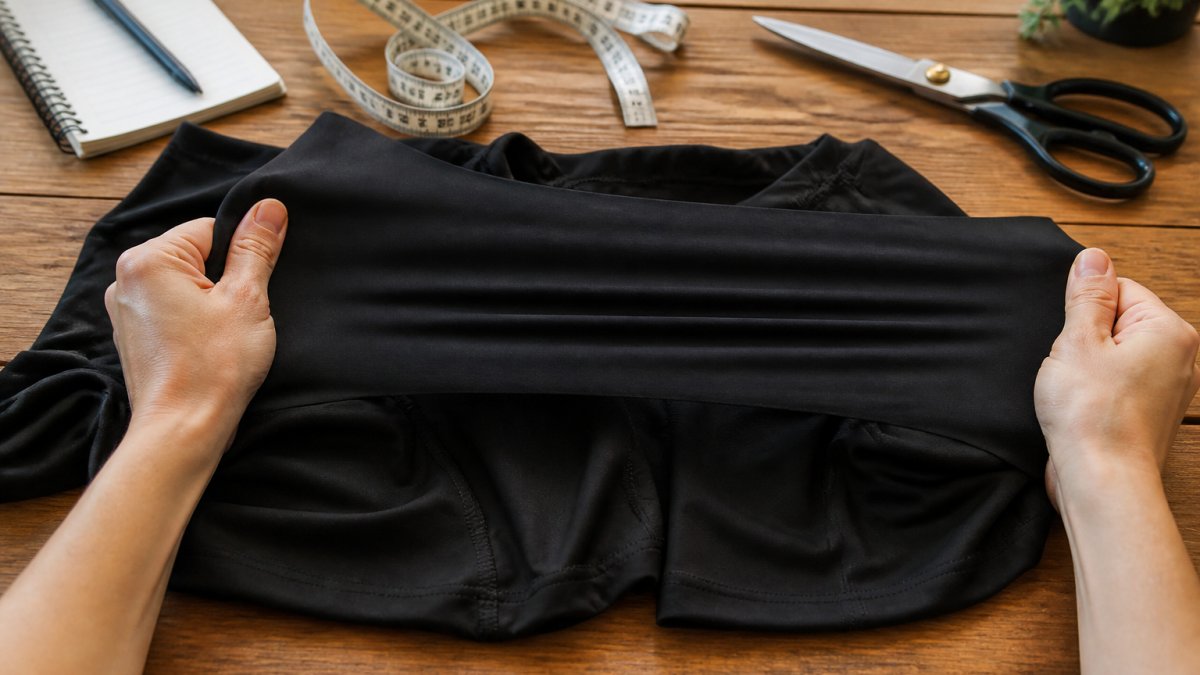
Lay the leggings flat on a table. Grab the fabric on both sides at the thigh level. Pull horizontally, perpendicular to the leg seam. The fabric should expand significantly. You should be able to stretch it 25-35% wider without resistance.
Feel the fabric during the stretch. Quality four-way stretch feels smooth and controlled. Cheap stretch fabric feels loose or flimsy. The difference is noticeable immediately.
Check if the waistband stretches as much as the leg. A supportive waistband stretches less intentionally. This keeps the waistband secure during movement. If the waistband stretches as much as the legs, it won't stay in place during intense exercise.
The Recovery Test
After stretching the fabric crosswise, release it completely. Count how many seconds it takes to return to its original shape. True four-way stretch recovers within 2-3 seconds. If recovery takes 5+ seconds, the elastane is degraded or the elastane content is too low.
Repeat the lengthwise and crosswise stretches five times in quick succession. The fabric should recover fully each time. If it stays slightly stretched after multiple pulls, the stretch quality is poor. This fabric will bag out during workouts and lose its shape after a few washes.
Reading Fabric Labels: What the Numbers Tell You
Fabric labels provide clues about stretch capability, but they're incomplete without understanding what the numbers actually mean in practice. Learning to read labels correctly saves you from buying leggings that disappoint.
Elastane Percentage and What It Really Means
Elastane percentage is the most important number on the label. It appears as part of the fibre content list, for example, "78% nylon, 22% elastane."
Below 10% elastane: This produces minimal stretch, typically two-way only. The fabric feels stiff and restrictive. These leggings are designed for casual wear, not workouts. Avoid this range if you need genuine four-way stretch.
10-15% elastane: This is the lower boundary for acceptable stretch. Leggings in this range may offer four-way stretch, but the recovery will be slower and the fabric may bag out after 20-30 wears. This is entry-level performance.
15-22% elastane: This is the sweet spot for true four-way stretch with excellent recovery. Fabrics in this range stretch significantly in all directions and return to their original shape within 2-3 seconds. Most premium workout leggings sit in this range. The fabric maintains its shape through dozens of washes.
Above 22% elastane: Higher elastane percentages create more stretch, but with trade-offs. The fabric may feel overly stretchy or "squishy." It can lose shape faster because the elastane fibres degrade more quickly under repeated stress. Some people prefer this feel for maximum flexibility, but durability suffers.
Above 25% elastane: This is rarely seen in quality leggings. The fabric often feels plasticky or overly elastic. Recovery slows noticeably. The leggings will bag out within weeks of regular use.
The Nylon Quality Question
The label tells you the elastane percentage but often doesn't specify nylon quality. This is a gap. Two leggings can both say "78% nylon, 22% elastane" but feel completely different.
Look for these label clues that suggest higher-quality nylon:
- "High-denier nylon" or "premium nylon": Denier refers to the thickness of individual nylon fibres. Higher denier (typically 200D or above) means thicker, more durable fibres that resist pilling and maintain smoothness through repeated wear.
- "Recycled nylon" or "regenerated nylon": These often indicate a more controlled manufacturing process and can signal better quality control.
- "Moisture-wicking" or "quick-dry": This indicates the nylon has been treated or woven to move sweat away from skin. Untreated nylon absorbs moisture and feels heavy when wet.
- "Anti-microbial" or "odour-resistant": These treatments are typically applied to higher-quality fabrics. Budget leggings rarely include these.
Generic labels that simply say "nylon and elastane" without qualification often indicate lower-quality materials that pill easily or lose shape quickly.
What Labels Don't Tell You
Here's the critical gap: elastane percentage alone does not guarantee four-way stretch. A label showing 20% elastane could be two-way or four-way depending on how the elastane is woven into the fabric. This is why the diagonal-pull test (described in the previous section) is essential. The label gives you a starting point; the test confirms the reality.
Labels also don't reveal recovery speed or durability. Two fabrics with identical elastane percentages can recover at different rates depending on the quality of the elastane fibres themselves. Premium elastane (often sourced from specific manufacturers) recovers faster and lasts longer than budget elastane.
Spandex vs Elastane: Same Thing, Different Name
Some labels use "spandex" instead of "elastane." These terms are interchangeable. Spandex is a brand name (originally trademarked by DuPont); elastane is the generic term. Don't let different terminology confuse you. A label reading "78% nylon, 22% spandex" is identical in meaning to "78% nylon, 22% elastane."
The Percentage Order Matters
Fibre content is always listed in descending order by weight. The highest percentage appears first. This means if the label reads "78% nylon, 22% elastane," nylon makes up the bulk of the fabric and elastane provides the stretch. Never assume a fabric has four-way stretch if elastane appears last on the list with a percentage below 15%.
Reading Between the Lines
Marketing language on labels can be revealing. Terms like "performance," "technical," "advanced stretch," or "engineered" suggest the manufacturer invested in better materials and construction. These leggings typically deliver more reliable four-way stretch and better durability.
Generic descriptions without these qualifiers, simply "leggings" or "stretch pants", often indicate budget construction. The elastane percentage might be adequate, but the overall quality is lower.
How to Tell if Leggings Are Too Tight
Proper fit is different from tightness. Leggings should feel snug but not restrictive. If you can't bend, squat, or twist comfortably, they're too tight.
A simple test: sit down fully in the leggings. If the waistband digs into your skin or the thighs feel painfully tight, size up. You should sit without discomfort. The fabric should move with your legs, not against them.
Check the seams during movement. Tight seams create deep marks on your skin that don't fade for hours. This indicates the fit is too small. Seams should be visible but not painful.
The waistband should sit at your natural waist without rolling down or cutting off circulation. If you adjust the waistband constantly during workouts, the fit is wrong. A proper waistband stays in place without feeling restrictive.
Testing Stretch During Actual Movement
The best test is real movement. Put on the leggings and perform your actual workout. Do your normal exercises: squats, lunges, twists, bends.
During squats, the fabric should move with your legs. You shouldn't feel the material pulling or restricting your depth. If you can't squat as low as usual, the stretch is insufficient.
During lunges, the thigh fabric should expand without tearing or creating visible stress marks. The seams should stay flat against your skin. Diagonal seams should feel comfortable during the lunge motion.
During twists, the crosswise stretch becomes critical. Rotate your torso fully. The fabric should move freely. If you feel resistance or the leggings roll down, the four-way stretch is inadequate.
After 20 minutes of movement, check the fabric. True four-way stretch shows no visible bagging or sagging. The fabric returns to its original shape. If the leggings feel loose or stretched out, the elastane quality is poor.
What to Avoid: Common Signs of Poor Stretch Quality
Cheap four-way stretch fabrics show these warning signs immediately. Visible pilling develops within the first wear. Pilling means the nylon fibres are low quality and break down during friction.
Seams that pucker or wrinkle indicate poor construction. Quality leggings have flat, secure seams. Puckered seams fail faster and create uncomfortable marks during movement.
Colour fading after one wash suggests the dye isn't properly set. This often correlates with poor fabric quality overall. Premium leggings maintain colour through dozens of washes.
Waistbands that roll down during exercise signal weak elastane. A quality waistband holds firm without cutting off circulation. Rolling waistbands need constant adjustment and ruin your workout focus.
Fabric that feels stiff or plasticky indicates excessive synthetic coating or low-quality elastane. Premium four-way stretch feels smooth and natural. It moves with your skin, not against it.
Transparency when stretched is a critical failure. True four-way stretch maintains opacity even during deep squats. If you can see through the fabric when stretched, it's squat-proof failure. This is non-negotiable for confidence during workouts.
Identifying true four-way stretch requires checking fabric composition, performing simple at-home tests, and feeling how the leggings perform during real movement. GrantB Sportswear's leggings use premium 78% nylon and 22% elastane construction specifically to deliver genuine four-way stretch that adapts to your body through every workout. When you invest in leggings with verified four-way stretch, you're choosing apparel that moves with you, recovers properly, and maintains its shape season after season. Get started with GrantB Sportswear's Sculpt Leggings and experience the difference that true four-way stretch makes during your training.

Frequently Asked Questions
What is the difference between two-way and four-way stretch fabric?
Two-way stretch fabric moves in two directions: lengthwise (up and down) or crosswise (side to side). Four-way stretch moves in all directions, including diagonally. Four-way stretch offers greater freedom of movement and better recovery, making it ideal for intense workouts. When you bend, twist, and lunge, four-way stretch adapts to your body without restricting motion or creating uncomfortable pulls.
How can you test whether leggings have true four-way stretch?
Test lengthwise stretch by pulling the waistband toward the hem. Test crosswise stretch by pulling the fabric side to side at the thigh. Both should stretch significantly without resistance. Then release and watch the fabric recover to its original shape within seconds. If either direction shows minimal give or the fabric stays stretched out, it's not true four-way stretch. Repeat this test on different areas of the leggings to ensure consistent stretch throughout.
Does fabric composition determine how stretchy leggings are?
Yes, fibre content directly affects stretch. Leggings with elastane (spandex) percentages between 15-25% typically offer excellent four-way stretch and recovery. The base fabric, usually nylon or polyester, provides durability and moisture-wicking. GrantB Sculpt Leggings use 78% nylon and 22% elastane, engineered to deliver unrestricted four-way stretch that adapts to every movement while maintaining shape and durability through intense training.
Can leggings lose their stretch after washing?
Quality four-way stretch leggings maintain elasticity through repeated washing when cared for properly. However, fabric recovery can degrade if leggings are exposed to excessive heat (hot water, high dryer settings) or harsh detergents. Premium fabrics with high-grade elastane resist bagging and shape loss better than budget alternatives. Always check care labels and wash in cool water to preserve the stretch and longevity of your activewear.