

Can You Wear Two Sports Bras for Running? The Real Answer
Last Updated: November 7, 2026
Quick Summary
Yes, you can wear two sports bras for running, but most runners shouldn't need to. Layering can feel more secure, yet it often adds heat, pressure and rubbing rather than real support. The better fix is a single bra that fits properly and matches your impact level.
- Research found around 17% of elite women athletes said an individual bra assessment significantly improved performance.
- One bra is enough when it passes four checks: band, straps, cups and jumping.
- If you already chafe in one bra, adding a second usually makes it worse.
- Keep two running bras in active rotation and one spare, washing each after use.
- Replace the bra when the band no longer sits level even on the tightest hook.
Table of Contents
- Can You Wear Two Sports Bras for Running? What Actually Happens
- How to Reduce Breast Bounce When Running Without Layering
- Sports Bra Fit Guide: The Checks That Decide If One Bra Is Enough
- Sports Bra Chafing: Why Layering Makes It Worse
- When Two Sports Bras Might Genuinely Help
- Choosing the Best Sports Bra for Running in One Layer
- Testing a New Bra Before You Run in It
- Caring for Your Sports Bra So It Keeps Its Support
- Find Your Single-Bra Fit at GrantB Sportswear
- Frequently Asked Questions
Can You Wear Two Sports Bras for Running? What Actually Happens
Yes, you can wear two sports bras for running, but most runners shouldn't need to. Layering can feel more secure, yet it often adds heat, pressure and rubbing rather than real support. The better fix is a single bra that fits properly and matches your impact level.
Runners often reach for a second bra because the first one lets them down. That instinct makes sense. It also treats a symptom, not the cause.
A bra that fits and supports well does more than two that don't. Research from the University of Portsmouth on sports bra fit and performance found that around 17% of elite women athletes who received an individual bra assessment said it significantly improved their performance. One well-fitted bra beat guesswork.
Below, we explain what layering really does, how to reduce bounce without it, and how to tell if one bra is enough.
How to Reduce Breast Bounce When Running Without Layering
Bounce is reduced by fixing the fit and the support structure rather than adding bulk.
Here's the key point most guides miss. Bounce is a fit problem before it's a fabric problem. If your band rides up or your straps slip, a second bra just adds a second thing to adjust.
Why Bounce Comes From Fit, Not Fabric Volume
Extra fabric doesn't stop movement. A secure band and shaped cups do. When the band is snug and sits level, the bra anchors to your ribcage and limits vertical travel. When it's loose, no amount of layering fixes the gap.
The Support Features That Do the Work
Look for these before you consider a second layer:
- A firm underband that stays level when you move
- Adjustable straps you can tighten without digging in
- Structured or removable pads that hold shape
- Moisture-wicking fabric that stays light when wet
For a deeper look at how support types differ, our guide on compression vs encapsulation sports bra for running compares bounce control, fit and cup size so you can pick the right style.
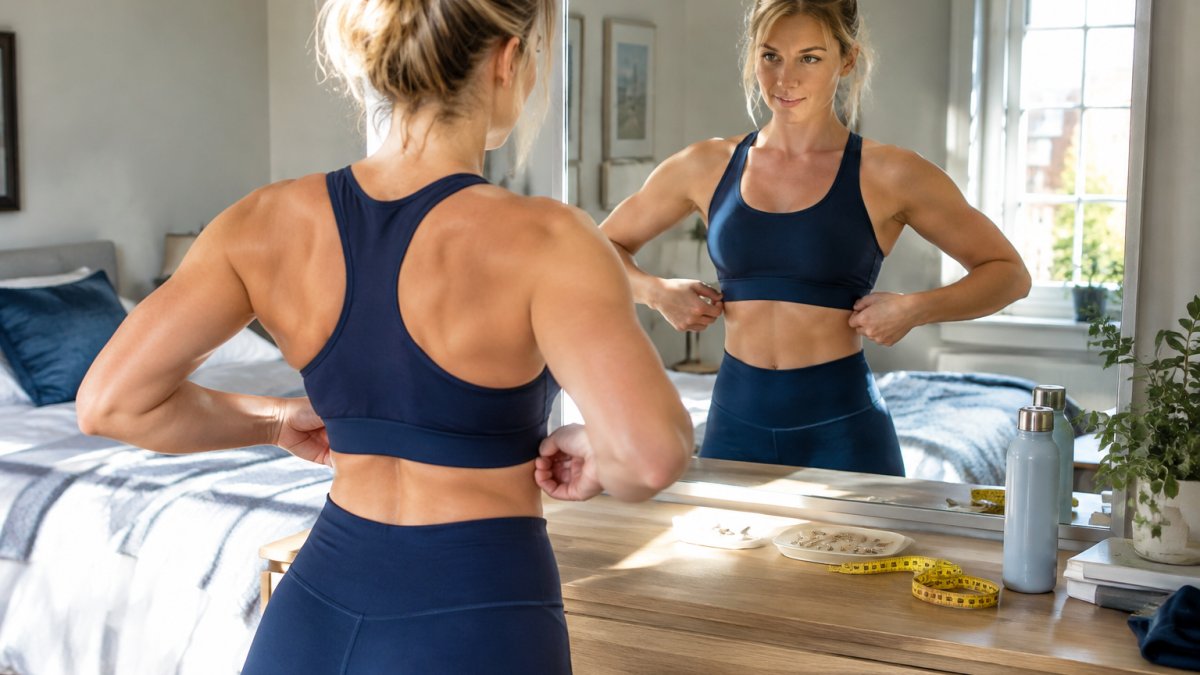
Sports Bra Fit Guide: The Checks That Decide If One Bra Is Enough
One bra is enough when it passes four quick checks: the band stays level, the straps hold without digging, the cups lie flat, and nothing shifts when you jump. If any check fails, fix the fit before you add a layer.
Run these tests before your next run:
- The band test. The band should sit level and snug. You should fit two fingers under it, no more. If it rides up at the back, go down a band size and up a cup size rather than tightening the straps.
- The strap test. Tighten the straps, then lift your arms. They shouldn't dig in or slide off. Straps that only stay put when over-tightened point to a band that is too loose.
- The jump test. Jump in place. If your breasts move more than a little, the support is too low. For running, look for a high-support bra rather than a medium-support style.
- The reach test. Twist and reach overhead. The bra shouldn't ride up or gap at the top. Gapping at the cup edge usually means the cup is too small or the shape is wrong for you.
A bra that passes all four gives you real support in one layer. A bra that fails them won't be saved by a second one.
Sizing Across Different Bodies and Support Needs
Watch out: if you have a shallow bust and a wide ribcage, a compression bra can flatten and feel restrictive; an encapsulation style with shaped cups usually moves better with you.
Inclusive Fit, Chafing and Accessibility
Chafing is a fit and fabric issue before it is a layering issue. Flat seams, soft-covered underbands and moisture-wicking fabric reduce friction at the band and underarm. If you use a prosthesis, a post-surgery style or a pocketed bra, check that the pocket sits flat and does not bunch when you run. For accessibility, front-zip and hook-and-eye front closures are easier to put on than over-the-head styles, and adjustable straps help if shoulder mobility is limited. These are practical adjustments, not compromises on support.
A Quick Buying Checklist
- Measure your underband snugly and your bust at the fullest point, then use the brand's size chart rather than guessing.
- Choose high support for running and HIIT; medium support suits yoga and strength sessions.
- Prioritise a firm, level band over thick straps.
- Check the fabric and construction if you chafe easily.
- Try the four tests above before removing tags, and return rather than layer if the fit fails.
Sports Bra Chafing: Why Layering Makes It Worse
Layering can add friction, since two bras mean two sets of seams and two bands rubbing as you run.
The friction adds up over distance. Heat builds between the layers. Sweat can't escape as easily. Retail guidance warns that layering can create extra heat, pressure and rubbing, which is exactly the recipe for sore, raw skin under the band and straps.
Watch out: if you already chafe in one bra, adding a second usually makes it worse, not better. Fix the fit and the fabric first. A smooth, moisture-wicking bra with flat seams does more for comfort than any extra layer.
When Two Sports Bras Might Genuinely Help
Two sports bras can help in a few narrow cases, but they are the exception. Some runners with very high support needs find a well-fitted second bra adds security for high-impact sessions.
The catch is real, though. Layering can trap heat, and needing two bras can signal that the first one lacks support. The honest answer is that layering is a workaround, not a solution.
If you do layer, keep both bras fitted and thin. Don't use it as a substitute for finding a bra that supports you on its own.
Choosing the Best Sports Bra for Running in One Layer
The best sports bra for running is a high-support style with a firm band, adjustable straps and moisture-wicking fabric that fits true to size.
Start with impact level. Running is high impact, so choose a high-support bra. Then check the construction and the fabric.
What to Look For on the Label and the Listing
Read the label like a checklist:
- Support level: high support for running and HIIT
- Fabric: a nylon and elastane blend for stretch and durability
- Straps: adjustable, so you can dial in the fit
- Pads: removable, so you can wash and reshape them
- Fit: true to size, with a secure, sculpting feel
Our fabric breakdown explains how a 78% nylon, 22% elastane blend delivers stretch, support and durability, so you can judge a bra on more than a photo.
When you're ready to buy, the GrantB Core Sports Bra is built for exactly this: high-impact support, engineered underwire, adjustable straps and moisture-wicking fabric for running and HIIT. It's £29.99 and designed to hold you secure in one layer.

| Feature | What to Check | Why It Matters |
|---|---|---|
| Support level | High support | Controls bounce in running |
| Band | Snug and level | Anchors the bra, limits movement |
| Straps | Adjustable | Lets you tighten the fit |
| Fabric | Nylon and elastane blend | Stretch, support, durability |
| Pads | Removable | Easier care and reshaping |
Testing a New Bra Before You Run in It
Test a new bra at home before you take it out for a run. A few minutes of movement tells you more than the label ever will.
Try this routine:
- Put the bra on and set the band and straps.
- Jump in place for 30 seconds.
- Do 10 high knees and 10 arm circles.
- Check for riding up, gapping or digging.
- Adjust once, then repeat the jumps.
If it still moves or digs after one adjustment, it's the wrong fit. Return it and size up, down or across rather than layering.
Caring for Your Sports Bra So It Keeps Its Support
Poor care can wear out a bra, and washing it correctly helps it keep its shape.
Follow these habits:
- Wash after every run to protect the elastic
- Use cool water and a gentle cycle or hand wash
- Skip the tumble dryer, which breaks down elastane
- Air dry flat, away from direct heat
- Avoid fabric softener, which coats the fibres and reduces wicking
Rotation and Cost Per Wear
A single bra washed after every run wears out faster than two or three bras in rotation. A practical approach is to keep two running bras in active rotation and one spare, washing each after use and air-drying between runs. At £29.99, a bra worn three times a week and replaced every six to nine months works out at roughly £1 to £2 per wear; rotating two bras spreads the load and extends the useful life of both. This is the budget case for buying a second bra you rotate, not a second bra you layer.
Signs It Is Time to Replace
Replace the bra when the band no longer sits level even on the tightest hook, when the straps stop holding after adjustment, when the cups crease or gap, or when the fabric feels stretched and thin. If you are reaching for a second bra because the first feels loose, that is usually a replacement signal rather than a layering solution.
Care for the Rest of the Kit
For sizing, washing and returns questions, our FAQ page covers the details.
Find Your Single-Bra Fit at GrantB Sportswear
The real challenge isn't finding a second bra. It's finding one that fits well enough that you never reach for it. Get the band, straps and support right, and layering stops being a question.
At GrantB Sportswear, we build gymwear designed to sculpt, support and move with you. Our high-support bras use moisture-wicking fabric, adjustable straps and a secure fit for running, HIIT and studio sessions. You get premium construction, plus free UK delivery and £10 off orders over £100.
Get started with GrantB Sportswear and run in one bra that finally does its job.
Frequently Asked Questions
Can you wear two sports bras for running?
Yes, you can, but it is rarely the best fix. Layering two bras can add compression, and some runners find it comfortable when the outer bra is designed for running. Others find it traps heat and causes rubbing. The important point is why you want to layer: if it is because your current bra does not control bounce, the answer is a better-fitting single bra, not a second one. Two bras that both fit badly will not solve a support problem, they will just add pressure points.
Is it safe to wear two sports bras at once?
There is no rule against it, but watch for the warning signs. Extra heat, pressure marks on the ribs or shoulders, and rubbing along the band all suggest the layering is doing more harm than good. If you feel restricted breathing or numbness in the shoulders, take it off. Anyone with a larger cup size or specific support needs should get a proper fitting rather than stacking bras, because a single high-support bra with adjustable straps and a structured cup will usually do the job better.
Does wearing two sports bras give you more support?
It can add compression, but compression is not the same as support. Support comes from a firm underband, adjustable straps, structured cups and a fit that holds the bust against the body. Two loose bras layered together still move. One bra that fits correctly at the band and cup controls bounce far more effectively. If you are unsure whether your bra fits, run the checks in our sports bra fit guide before buying a second one.
What should you do if your sports bra does not give enough support?
Start by checking the band, not the cup. The band should sit firm and level around your ribcage and stay put when you lift your arms. Then check the straps: they should be adjustable and sit flat without digging in. If both are right and bounce is still a problem, move to a high-support style with a structured cup, such as the GrantB Core Sports Bra at £29.99, which has engineered underwire, adjustable straps and removable pads. Replace a bra once the band has stretched and no longer holds.
