

Durable Workout Clothes for Women: 2026 Guide
Table of Contents
- Quick Comparison: Durable Workout Clothes for Women
- How We Evaluated These Durable Workout Clothes
- 1. GrantB Sculpt Leggings: Squat-Proof High-Waisted Support
- 2. GrantB Core Sports Bra: High-Impact Support That Lasts
- 3. GrantB Training Shorts: Breathable Performance for Intense Sessions
- 4. GrantB Sculpt Set: Coordinated Durability for Gym and Studio
- 5. GrantB Performance Set: Versatile Athleisure That Goes the Distance
- Are Recycled Polyester Leggings Durable?
- How to Care for High-Performance Activewear
- Conclusion: Choosing Durable Workout Clothes for Women
- Frequently Asked Questions
Last Updated: September 16, 2026
Quick Comparison: Durable Workout Clothes for Women
Durable workout clothes for women are garments built to survive repeated washing, heavy training loads and daily wear without losing their shape, stretch or coverage. At GrantB Sportswear, we build every piece around a single fabric composition, 78% nylon and 22% elastane, because that blend is what keeps elasticity retention high and pilling low over time.
The five pieces below cover the full training week, from heavy lifting to studio classes.
| Product | Price | Best For | Key Durability Feature |
|---|---|---|---|
| Sculpt Leggings | £58.65 | Squats and lifting | Squat-proof, non-see-through fabric |
| Core Sports Bra | £50.15 | High-impact training | Engineered underwire, adjustable straps |
| Training Shorts | £41.65 | Intense sessions | Four-way stretch, secure waistband |
| Sculpt Set | £101.15 | Gym and studio | Coordinated bra and leggings |
| Performance Set | £115.00 | Gym to street | Jacket plus high-waisted leggings |
Below, we break down what actually makes activewear last, how to stress-test it before you buy, and how to wash it so it survives.

How We Evaluated These Durable Workout Clothes
We judged each piece on four things: fabric composition, elasticity retention after repeated washing, stitching quality, and how well the fit holds during movement. Fabric comes first because it decides everything else. A high-grade nylon and elastane blend resists abrasion and anti-pilling far better than cheap polyester blends, which tend to go shiny and loose at the knees within months.
Stitching matters just as much. Flatlock seams reduce chafing and spread load across the fabric instead of concentrating it at one point, which is where most gym leggings split.
We also weighted body-type specific durability, because a garment that stays put on one frame can roll down on another. Waistband construction, not size, decides whether a legging stays in place.
1. GrantB Sculpt Leggings: Squat-Proof High-Waisted Support
The Sculpt Leggings are the strongest starting point if you train heavy and want a legging that stays put through squats, lunges and deadlifts. The dense 78% nylon, 22% elastane fabric is designed to be non-see-through when stretched, and the high waistband is built to stay securely in place rather than roll down mid-set.
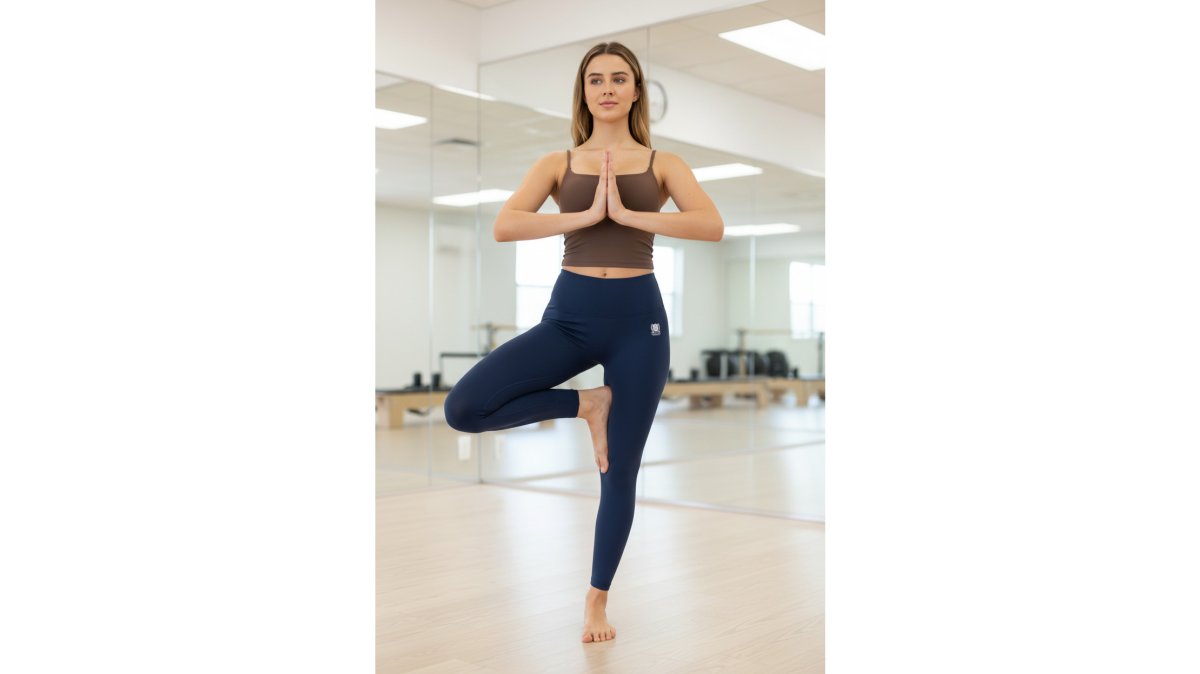
What most reviews miss is that squat-proofing is a fabric-density question, not a branding claim. A legging either blocks light when stretched or it doesn't, and you can test that yourself in a changing room under bright light before you commit.
The sculpting fit is designed to enhance your natural shape rather than squeeze it. Full-length coverage runs to the ankle.
Best for: Weightlifters and anyone doing heavy compound movements who needs coverage that holds.
2. GrantB Core Sports Bra: High-Impact Support That Lasts
High-impact support is where cheap sports bras fail first: the elastane fatigues, the band stretches out and the straps stop holding. The Core Sports Bra uses the same durable fabric blend, with an engineered underwire, adjustable straps and removable pads, built for running, HIIT and gym training.

Adjustable straps are the detail that extends a bra's working life. As elastane relaxes over time, you can tighten the fit instead of replacing the bra.
The one drawback is that a structured underwire bra takes longer to air-dry than a simple compression crop, so buy two if you train daily. Support level is rated high, which suits yoga, running and HIIT.
Best for: Anyone doing high-impact training who is tired of replacing stretched-out bras.
3. GrantB Training Shorts: Breathable Performance for Intense Sessions
Performance gym shorts live or die on their waistband. The Training Shorts use a high-waisted supportive band designed to stay comfortably in place, with functional pockets and a fitted cut that moves through squats and lunges without riding up.
Breathability is the second factor. Moisture-wicking fabric pulls sweat away from the skin and dries quickly, which matters more in shorts than leggings because there is more airflow and more exposed skin to manage.
Chafing prevention comes down to seam placement and a smooth fabric face. A soft, smooth finish against the thigh reduces friction on long cardio sessions in a way that a textured or cotton-heavy short cannot.
Best for: Cardio, HIIT and hot studio classes where breathability matters most.
4. GrantB Sculpt Set: Coordinated Durability for Gym and Studio
Buying a set removes the guesswork of matching support levels. The Sculpt Set pairs the Core Sports Bra with the Sculpt Leggings, so the support you get in the bra matches the compression in the legging. The leggings add functional pockets and moisture-wicking properties.

Coordinated sets also tend to last longer in practice, and not because the fabric is different. You wash them together, on the same cycle, at the same temperature, instead of throwing one piece in with towels and another with delicates.
The trade-off is flexibility. If you prefer a different bra for running and a different legging for yoga, buying separates gives you more control.
Best for: Gym-goers who want one reliable outfit for strength sessions and studio classes.
5. GrantB Performance Set: Versatile Athleisure That Goes the Distance
Versatile athleisure has to pass a harder test than gym kit: it needs to work in the studio and look presentable on the way to work. The Performance Set pairs a full-zip jacket with high-waisted leggings, both in the same breathable, moisture-wicking fabric. The sports bra is not included.
The jacket is lightweight and layers over a sports bra or fitted top, with secure pockets and a fitted silhouette. That makes it the piece that handles warm-ups, cool-downs and travel days.
If you want one purchase that covers the most scenarios, this is the set that earns its price. If you only train indoors, the Sculpt Set is the better value.
Best for: Frequent travellers and anyone who needs activewear that transitions from gym to daily wear.
Are Recycled Polyester Leggings Durable?
Recycled polyester leggings can be durable, but durability depends on the blend and the knit, not on whether the polyester is recycled. Recycled and virgin polyester behave almost identically once spun into yarn, so a recycled legging made with a high elastane content and a dense knit will outlast a virgin-polyester legging made cheaply.
Where recycled polyester falls short is stretch recovery. Polyester on its own has little natural give, so a recycled-polyester legging without enough elastane will bag at the knees and lose its shape faster than a nylon and elastane blend.
Nylon, the base of the GrantB fabric, is chosen for its abrasion resistance and second-skin finish. It resists the surface pilling that makes activewear look worn out long before it actually fails.
If sustainability is your priority, recycled polyester is a reasonable choice. If longevity is the priority, look at the elastane percentage and the fabric density first.
How to stress-test any legging before you buy
Most reviews are subjective. You can run three quick checks in a changing room that tell you more than any star rating:
- The light test. Stretch the fabric over your thigh under the brightest light in the shop. If you can see your hand through it at full stretch, it will go see-through in a squat. Fabric density, not branding, decides squat-proofing.
- The snap-back test. Pinch a section of the legging and pull it out by roughly 5 cm, then release. A high-elastane blend snaps back flat within a second. A cheap polyester blend returns slowly or stays slightly rippled, that ripple is the beginning of knee bagging.
- The seam rub. Run your thumbnail firmly along a flatlock seam. If fibres lift or fray immediately, the seam will be the first point of failure. Flatlock seams should sit flat against the fabric face with no raised ridge to catch on skin or equipment.
Pilling, elasticity retention and seam strength: what actually fails first
Across repeated wash-and-wear cycles, three failure modes dominate:
- Surface pilling, usually appears first, around the inner thigh and under the waistband where friction is highest. A dense nylon knit resists this far better than a loose polyester knit.
- Elasticity loss, the elastane fatigues and the garment stops recovering its shape. This is accelerated by heat, which is why wash temperature matters more than wash frequency.
- Seam failure, concentrated load at a single stitch point splits the fabric. Flatlock seams spread that load across the whole seam line instead.
A common pattern reported by regular gym-goers is that cheap polyester leggings show visible pilling within two to three months of twice-weekly wear, while a dense nylon and elastane blend of the same weight typically holds its surface for considerably longer. The variable is fabric density and elastane percentage, not price alone.
Activity-specific durability: what your training actually demands
Different activities stress fabric in different ways, and a legging that survives one may fail at another:
- Weightlifting and CrossFit, abrasion resistance matters most. Barbells, rigs, belts and platforms rub against the fabric. Look for a dense knit with a smooth face and reinforced flatlock seams.
- Running, chafing prevention matters most. Seam placement and a smooth fabric face reduce friction on long distances far more than thickness does. A bulky seam will rub you raw regardless of how durable the fabric is.
- Yoga and Pilates, stretch recovery matters most. Repeated deep flexion at the hip and knee tests elastane fatigue, so a high elastane percentage holds shape better than a stiff, low-stretch fabric.
- HIIT and studio classes, moisture management matters most. Quick-dry fabric that pulls sweat away from the skin keeps the garment lighter and reduces the friction that causes chafing.
Body-type specific durability
Durability is not one-size-fits-all. Where a garment wears out depends partly on body shape:
- Thigh rub is the single most common cause of inner-thigh pilling. A denser knit and a shorter inseam that reduces fabric-to-fabric contact both help.
- Waistband roll-down affects anyone with a shorter torso or a fuller waist-to-hip ratio. A wide, structured waistband with a silicone grip strip stays put far better than a thin elastic band.
- Strap dig on fuller busts concentrates load on a narrow area, stretching the elastane in the straps first. Adjustable straps let you redistribute that load as the fabric relaxes.
Extending the life of what you already own
Durability is not only about what you buy, it is about how long you keep it working:
- Repair before you replace. A split seam can usually be re-stitched, and a small pull can be secured with a drop of clear fabric glue to stop it running. Many brands and local tailors offer repair services for activewear.
- Recycle properly. Textile recycling schemes accept worn-out activewear that charity shops will not take. Check your local council's textile collection or a dedicated clothing recycling bank rather than putting gym kit in general waste.
- Rotate, don't retire. Rotating three or four pieces spreads the wear across each garment, so no single legging takes the full load of your training week.
If sustainability is your priority, recycled polyester is a reasonable choice. If longevity is the priority, look at the elastane percentage and the fabric density first, and then look after what you buy.
How to Care for High-Performance Activewear
Washing is where most expensive gym kit dies. Heat breaks down elastane, so the single most effective change you can make is washing at 30°C or lower. Hot washes and tumble drying are the two fastest ways to destroy elasticity retention.
The mechanism matters: elastane is a polyurethane-based fibre held under tension in the knit. Heat above roughly 40°C causes the polymer chains to relax permanently, so the garment stops snapping back. Once that happens, no amount of careful washing will restore it. Tumble drying is worse still because it combines heat with mechanical tumbling, which abrades the fabric face at the same time.
Fabric softener works differently but is just as damaging. It leaves a waxy cationic residue that coats the fibres and blocks the moisture-wicking finish. The garment still looks fine, but it stops managing sweat, and the residue also traps odour.
A short care routine that works:
- Turn garments inside out before washing to protect the outer face from abrasion
- Wash at 30°C or cooler on a gentle cycle
- Skip fabric softener, which coats the fibres and blocks moisture-wicking
- Wash with similar fabrics, not towels or heavy cotton
- Use a mesh laundry bag if you mix loads, to stop zips and hooks snagging the fabric
- Air-dry flat or hang, away from direct heat
- Avoid tumble drying entirely
Drying and storing without stretching the elastic
How you dry and store a garment matters as much as how you wash it:
- Air-dry flat for leggings and structured bras, so the weight of wet fabric does not pull the elastane out of shape. Hanging a heavy wet legging by the waistband is one of the fastest ways to stretch the band.
- Hang bras by the band, not the straps, or lay them flat. Straps carry the full weight of a wet bra and stretch first.
- Keep away from radiators and direct sun. Both accelerate elastane fatigue even without a tumble dryer.
- Fold leggings rather than hanging them by the waistband, which stretches the elastic over time.
- Store clean and dry. Damp activewear left in a gym bag grows odour-causing bacteria that survive normal washes.
Repair and recycling: the durability step most guides skip
The most sustainable piece of activewear is the one you keep wearing. Before you replace a garment, check whether it can be repaired:
- Split seams can usually be re-stitched by a tailor or with a basic machine. Flatlock seams are harder to repair than standard seams, so ask before you assume.
- Small pulls and snags can be secured with a drop of clear fabric glue to stop them running further.
- Stretched waistbands are usually not repairable, which is why buying a structured band in the first place is the better long-term decision.
- Worn-out kit should go to a textile recycling bank or your local council's textile collection, not general waste. Charity shops generally will not accept activewear with pilling or stretched elastic.
A simple rotation rule
If you train four or more times a week, own at least three sets and rotate them. Spreading wear across multiple garments means each one is washed less often, exposed to less heat, and given time to recover its shape between wears. A single set worn and washed daily will fatigue far faster than the same set worn twice a week, even with identical care.
Conclusion: Choosing Durable Workout Clothes for Women
The hard part of buying activewear is that durability is invisible in a product photo. You cannot see elastane fatigue or fabric density until the garment has been through fifty washes, which is why so many expensive pieces fail quietly after a few months.
Buy on fabric composition and construction, not on hype. A 78% nylon, 22% elastane blend with flatlock seams and a supportive waistband will outlast a cheaper polyester legging every time, provided you wash it properly.
Frequently Asked Questions
What is the best material for durable workout clothes for women?
High-performance fabrics like nylon and elastane blends offer the best durability. A composition of 78% nylon and 22% elastane provides four-way stretch, moisture-wicking, and shape retention. This blend resists pilling and maintains elasticity after repeated washes. Look for dense, squat-proof fabrics that are non-see-through and designed to stay in place during high-impact activities.
How can you tell if gym wear is high quality?
Check the fabric composition, stitching, and construction details. High-quality gym wear often uses a nylon-elastane blend for stretch and recovery. Look for flatlock seams to prevent chafing, a supportive waistband that stays put, and squat-proof opacity. Durability features like anti-pilling and abrasion-resistant finishes also indicate better quality. Reading care labels and customer reviews about longevity helps confirm real-world performance.
Are recycled polyester leggings durable?
Yes, recycled polyester leggings can be just as durable as those made from virgin polyester. The recycling process creates fibers with the same strength and resilience. Durability depends more on fabric construction, weight, and blend than on whether the polyester is recycled. Look for a dense knit and a high elastane content for stretch recovery, and follow care instructions to extend the life of your leggings.
How should you wash gym clothes to maintain their durability?
Wash gym clothes in cold water on a gentle cycle to protect the fabric and elasticity. Turn garments inside out and use a mesh laundry bag to reduce friction. Avoid fabric softeners and bleach, which can break down elastane and reduce moisture-wicking properties. Air dry or tumble dry on low heat. Following these steps helps prevent pilling, fading, and loss of shape, keeping your activewear performing longer.
GrantB Sportswear builds its collection around exactly that principle: premium gymwear designed to sculpt, support and move with you, with free delivery and £10 off orders over £100. If you want leggings that stay put through heavy squats, a sports bra with adjustable straps that keeps its support, or a coordinated set that works from studio to street, get started with GrantB Sportswear and train in kit that refuses to compromise on durability.