

Buy High Support Sports Bra: 2026 Review & Fit Guide
Table of Contents
- Why a High Support Sports Bra Changes Your Training
- Sports Bra Support Levels Explained: High, Medium and Light
- GrantB Core Sports Bra: The Standalone High Support Pick
- GrantB Sculpt Set: Support That Works for Gym and Studio
- GrantB Performance Set: Layering for Cooler Sessions
- GrantB Core Shorts Set: High Support for Warm Weather Training
- How to Measure Sports Bra Size at Home
- Is High Impact Support Worth It for Yoga?
- Comparing the Range: Which GrantB Piece Fits Your Routine?
- Frequently Asked Questions
Last Updated: September 15, 2026
Why a High Support Sports Bra Changes Your Training
A sports bra that moves with you instead of against you is the single most underrated piece of kit in a gym bag. If you have ever cut a run short, adjusted a strap mid-set, or felt your chest shift during a burpee, you already know the problem. This guide from GrantB Sportswear breaks down exactly how to buy high support sports bra options that actually hold up, what the different support levels mean, and how to measure yourself properly at home.

The difference between a good and a bad bra shows up in the details. Small amounts of unwanted movement accumulate over hundreds of reps, and they pull your focus away from form. Supportive, well-fitted gear removes that distraction entirely.
Below, we cover the GrantB range piece by piece, explain how to measure your size without a fitting room, and answer the question almost everyone asks: is high impact support worth it for yoga? By the end you will know which piece suits your routine.
Sports Bra Support Levels Explained: High, Medium and Light
Support level is the amount of movement control a bra provides during activity, and it is the first thing to check before you buy anything. A high support sports bra is built for running, HIIT, and heavy lifting, where the chest moves through a large vertical range. Medium support suits cycling, weight training, and studio classes. Light support is for yoga, pilates, and walking.
The construction differs in three places:
- Underband tension, a firmer, wider band anchors the bra to your ribcage so it cannot ride up.
- Cup construction, encapsulation cups hold each breast separately, while compression styles press them flat against the chest.
- Strap design, wider, adjustable straps spread load across the shoulders instead of digging in.
Most women need two or three bras across these levels, not one. Match the support level to the intensity of the session, not to your cup size alone.
Matching support level to your training
| Support level | Typical activities | Construction hallmarks |
|---|---|---|
| High | Running, HIIT, plyometrics, boxing, heavy lifting | Wide firm underband, encapsulation or structured cups, adjustable wide straps, often underwired |
| Medium | Cycling, weight training, spin, studio classes, hiking | Moderate underband, moulded cups or light compression, adjustable straps |
| Light | Yoga, pilates, walking, stretching, recovery | Soft band, minimal seams, thin straps, often pull-on with no closure |
The mistake to avoid is treating support level as a status symbol and buying the firmest bra for everything. A high support bra worn to a restorative yoga class is uncomfortable and unnecessary; a light support bra worn to a sprint session will not control movement no matter how well it fits. Buy for the session, not for the label.
Compression versus encapsulation
These are the two mechanisms a sports bra uses to control movement, and they behave very differently.
Compression presses the breasts flat against the chest wall. It is simple, seamless and effective for smaller cup sizes, and it tends to be the more affordable construction. Its weakness is that it does not stop vertical bounce as well as encapsulation once there is more mass to control, and it can feel restrictive in a deep backbend.
Encapsulation gives each breast its own shaped cup, so movement is controlled in multiple directions rather than just pressed inward. It generally gives better support for larger cup sizes and a more natural shape, at the cost of more seams, more structure and often a higher price. Many high support bras combine the two, using encapsulation cups inside a compressive outer layer.
The durability question most guides skip
Here is the part almost no buying guide covers: support is not a fixed property of a bra, it degrades. The elastane that gives a high support bra its grip on your ribcage loses recovery over time, and heat is its main enemy. Wash a bra in hot water or tumble-dry it and you accelerate that loss.
A practical pattern many regular trainers notice is that a high support bra feels noticeably less anchored somewhere between roughly fifty and a hundred wash cycles, depending on how it is cared for. The band is usually the first thing to go: it stretches, stops sitting level, and starts riding up at the back even though the cups still look fine. When that happens, the bra is no longer providing high support, whatever the label says.
You can slow this down considerably:
- Wash in cold water, ideally on a gentle cycle, and use a mesh laundry bag to protect the hooks and straps.
- Skip the tumble dryer entirely. Air-dry flat or hanging, away from direct heat.
- Rotate between at least two high support bras so each one gets a rest between wears, which lets the elastane recover.
- Never leave a damp bra crumpled in a gym bag; prolonged moisture weakens the fabric.
How to tell when a bra has stopped supporting
Beyond the band test, watch for three signals. Straps that need tightening more often than they used to suggest the band has stretched. Cups that no longer sit flat, or a centre panel that starts to float, suggest the structure has softened. And a general feeling that you are adjusting the bra mid-session, when you never used to, is the clearest sign of all. Replacing a high support bra on this schedule is not wasteful; it is the difference between training in support and training in the memory of support.
NHS guidance on physical activity is a useful reference for matching exercise intensity to the right level of kit.
GrantB Core Sports Bra: The Standalone High Support Pick
The GrantB Core Sports Bra is the most versatile single piece in the range and the best starting point if you only want to buy one bra. At £59.00, it pairs engineered underwire with adjustable straps and a structured cup design, which is exactly the combination you want for running, HIIT, and studio workouts.
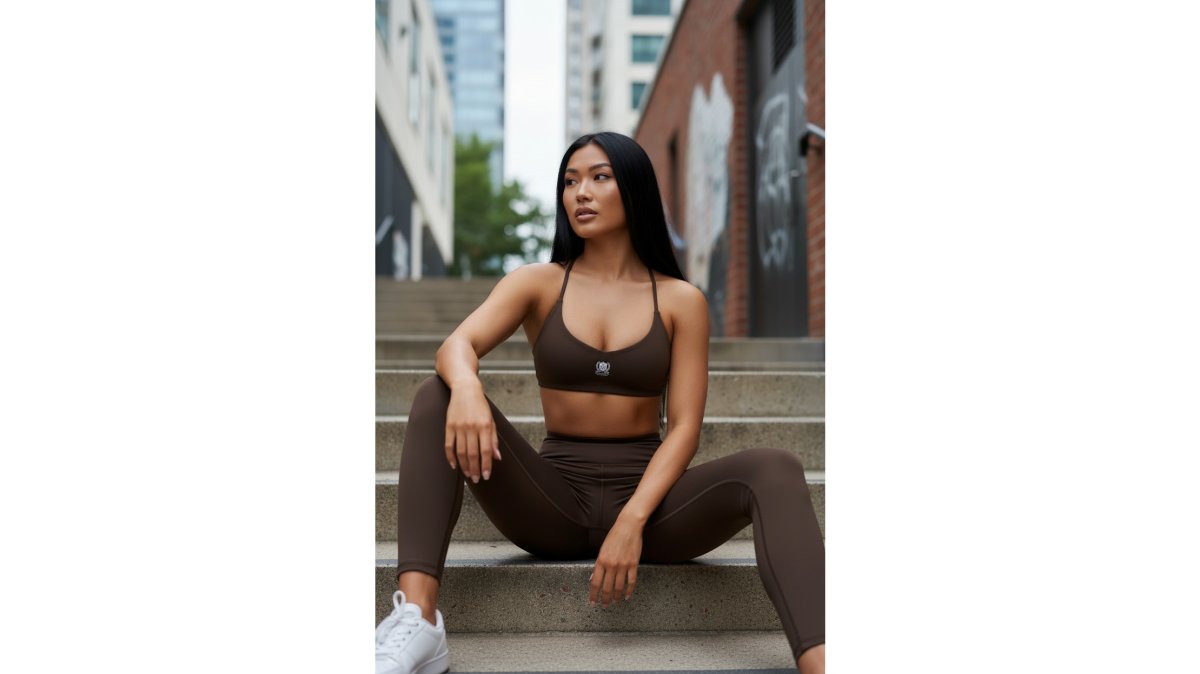
The fabric is a 78% nylon, 22% elastane blend. It is lightweight, moisture-wicking, and quick-drying, which keeps chafing down on longer sessions.
The fit runs true to size with a sculpting, secure feel. Where it falls short: if you want a matching legging, you will need to buy one separately. For a single, do-everything bra, that is a trade worth making.
GrantB Sculpt Set: Support That Works for Gym and Studio
Buying a bra and leggings separately usually means they never quite match. The GrantB Sculpt Set solves that at £119.00, pairing a supportive sports bra with leggings that include functional pockets and moisture-wicking fabric. The bra handles high-impact activity, so you can move straight from a spin class into a strength session without changing.

What most guides miss is how much a coordinated set changes your morning routine. One decision instead of three, and a silhouette that works in the studio and on the street.
The leggings hold their shape through squats and deadlifts because the same 78% nylon, 22% elastane composition runs through the whole set. If you have been burned before by leggings that need hoisting mid-set, this is the difference that matters.
GrantB Performance Set: Layering for Cooler Sessions
Cold-weather training needs a different approach. The GrantB Performance Set at £139.00 combines a sleek jacket with high-waisted leggings, designed for layering through a workout and transitioning from studio to street. The jacket has a modern silhouette with breathable fabric, so you can warm up in it and shed it once your heart rate climbs.

One thing to know before you order: the sports bra is not included in this set.
The high-waisted leggings offer the same superior support and flattering fit as the rest of the range, built from the identical nylon and elastane blend. For early-morning sessions or outdoor runs in cooler months, the extra layer makes a real difference to how quickly you warm up.
GrantB Core Shorts Set: High Support for Warm Weather Training
Warm-weather training calls for less fabric and more breathability. The GrantB Core Shorts Set at £98.00 pairs a lightweight vest with high-waisted shorts, both cut from the same quick-drying athletic fabric. The bra delivers breathable support with a flattering fit, and the shorts provide coverage and comfort through cardio, strength work, and yoga.
This is the set to reach for in summer or in a heated studio. The high-waisted shorts stay put during lunges and hip hinges, and the fabric wicks moisture rather than holding it against your skin, which is the main cause of chafing on longer sessions.
Where it falls short: shorts offer less coverage than leggings, so if you prefer full-length support for floor work, the Sculpt Set is the better match.
How to Measure Sports Bra Size at Home
To measure your sports bra size, take two measurements with a soft tape: your band size directly under the bust, and your bust size at the fullest point. The difference between them gives your cup size. Do this wearing an unpadded bra or no bra at all, and keep the tape level and snug, not tight.
Here is the process, step by step:
- Band measurement, wrap the tape around your ribcage, directly under the bust, and exhale fully before reading the number. Round to the nearest whole centimetre.
- Bust measurement, wrap the tape around the fullest part of your bust, keeping it parallel to the floor. Check in a mirror that the tape is not dipping at the back.
- Cup calculation, subtract the band measurement from the bust measurement. A 2.5 cm difference is roughly an A cup, 5 cm a B, 7.5 cm a C, and 10 cm a D (the NHS).
- Check the band first, the underband carries most of the support. If it rides up at the back, go down a band size.
- Test the straps, adjustable straps should sit flat without digging in. If they leave marks, the band is too loose.
A common mistake is sizing up when a bra feels tight. Nine times out of ten the band is simply too large and the cups too small, which pushes all the load onto your shoulders.
The sister-size rule that saves a return
Band and cup sizes are not independent. If a 34C feels close but the band is slightly too firm, a 36B holds a very similar cup volume on a looser band. This is called sister sizing, and it is the single most useful trick when you are between sizes. Move one band size up and one cup size down, or one band size down and one cup size up, and you keep roughly the same cup volume while changing how the bra sits on your ribcage.
For a high support bra specifically, sister sizing matters more than it does for a light-support style. The underband does the heavy lifting, so a band that is even slightly too loose will let the whole bra migrate upward during running or jumping. When in doubt, favour the firmer band and adjust the cups.
The five-point fit check
Numbers get you close; a physical check gets you the rest of the way. Run through these five points before you commit to a size:
- Band level. The underband should sit level all the way around, front and back. If the back rides up, the band is too big.
- Two-finger rule. You should be able to slide two fingers under the band at the side. Less than that and it will chafe; more and it will not anchor.
- Centre gore. On an encapsulation or underwired style, the centre panel should sit flat against your sternum, not float away from the chest.
- Cup edge. The top edge of the cup should lie smooth against the skin. Any gaping means the cup is too large; any spillover means it is too small.
- Movement test. Jump, jog on the spot and reach overhead. If you feel vertical bounce or the band shifts, the bra is not doing its job regardless of what the label says.
How support needs change with cup size
The measurement method is the same across the size range, but what counts as adequate support is not. Smaller cup sizes can often get away with a compression-style bra that presses the chest flat, because there is less mass to control. Larger cup sizes generally need encapsulation, where each breast is held in its own structured cup, because compression alone tends to create a uniboob and does not stop vertical movement as effectively.
A useful rule of thumb: the higher your cup size, the more you should prioritise encapsulation, a wide underband and adjustable straps over a minimal, seamless design. If you are above roughly a DD, a bra with no underwire and no separate cups is unlikely to give you genuine high support no matter how tightly it fits.
When to re-measure
Your size is not fixed. Band size commonly shifts with changes in weight, training load and hormonal cycle, and a bra that fitted perfectly six months ago may now be sitting on the wrong hook. Re-measure every six months, or any time you notice the band riding up, the straps needing constant adjustment, or the cups no longer sitting flat. Replacing a stretched-out bra is not a luxury; a worn band is the most common reason a high support bra stops supporting.
Is High Impact Support Worth It for Yoga?
For most yoga practitioners, high impact support is more than you need, but not by as much as you might think. Yoga involves inversions, deep twists, and sustained forward folds, all of which shift the chest in ways a light-support bra cannot control. If you are doing vinyasa, power yoga, or anything with a jump-through, a high support sports bra keeps everything in place and lets you focus on breath and alignment rather than adjusting fabric.
Where high support is genuinely overkill: restorative, yin, and gentle hatha classes. A medium or light bra is more comfortable here because there is no impact to absorb.
The practical answer is to own one high-support bra and one lighter option. The GrantB Core Sports Bra covers the power-yoga end of the spectrum, and its four-way stretch means it does not fight you in a deep backbend the way a rigid compression bra would.
Comparing the Range: Which GrantB Piece Fits Your Routine?
Choosing between the four pieces comes down to two questions: what you train in, and what the weather is doing. Here is the range side by side.
| Piece | Price | What's Included | Best For |
|---|---|---|---|
| Core Sports Bra | £59.00 | Bra only | One bra for everything |
| Sculpt Set | £119.00 | Bra + leggings | Gym and studio sessions |
| Performance Set | £139.00 | Jacket + leggings | Cooler sessions, layering |
| Core Shorts Set | £98.00 | Vest + shorts | Warm weather, cardio |
All four share the same 78% nylon, 22% elastane composition. The differences are in coverage, layering, and what you get in the box.
If you are starting from scratch, the Sculpt Set gives you the most complete solution for the money.
Frequently Asked Questions
What sports bra gives the most support?
The most supportive sports bras combine a firm underband, adjustable straps, and encapsulated cups rather than simple compression. Encapsulation separates each breast to limit vertical and lateral movement, which matters most during running or HIIT. The GrantB Core Sports Bra uses engineered underwire and a structured cup design, rated high support, so it holds shape through intense sessions. A snug underband that sits flat against your ribcage is the single biggest factor in how much bounce reduction you actually get.
How do I know if my sports bra provides enough support?
Test it with movement, not just a mirror. Jump, run on the spot, and reach overhead. If your breasts move more than slightly, or if you feel the need to hold them, the support level is too low. The underband should stay level and not ride up at the back. Straps should stay put without digging in. If you can fit more than two fingers under the band, size down. If you get chafing or red marks, size up or switch to a seamless design.
Is high impact support worth it for yoga or low-intensity movement?
For most yoga styles, high impact support is more than you need, and a medium support bra usually feels more comfortable. The exception is dynamic flows, inversions, or anyone with a larger cup size who wants extra stability. If you practise hot yoga, moisture-wicking and quick-drying fabric matters more than compression. A high support bra like the GrantB Core Sports Bra works fine for yoga, but you may prefer something lighter for slower sessions.
How often should you replace your high support sports bra?
Replace a high support sports bra every six to twelve months if you train three or more times a week. Elasticity is the first thing to go. Signs it is time: the underband no longer sits flat, straps need constant adjusting, or the fabric has lost its snap. Wash on a cool cycle and air dry to extend its life. Rotating two or three bras rather than wearing one daily also slows the breakdown of elastane.
What should I look for in a sports bra for high-intensity training?
Prioritise four things: a wide, firm underband for stability, adjustable straps for a custom fit, moisture-wicking technical fabric, and a cup size match rather than a generic S/M/L. A racerback or hook-and-eye closure helps lock the band in place. If you are above a DD cup, encapsulation beats compression every time. The GrantB Sculpt Set pairs a high support bra with moisture-wicking leggings, covering both upper and lower body needs.